Articles

Investing in the Future with Thomas Staubli

In a world fueled by technology startups and strategic investments, few figures are as compelling and insightful as Thomas Staubli, main investor of OnchainLabs. With a notable career spanning more than three decades, Thomas has witnessed the evolution of the financial and technology sectors, seizing opportunities to shape them through strategic investments and leadership roles. From his early days at Credit Suisse, navigating complex financial environments in Zurich, New York and Frankfurt, to his prominent role in scaling Partners Group AG from a startup to a powerhouse, Thomas demonstrated his deep understanding of the investment landscape and his ability to foresee and leverage upcoming trends in both technology and finance. In 2015, Thomas embarked on a new venture by establishing himself as a private investor, injecting resources in promising young, small-cap startups across the DACH region of Europe. His portfolio ranges from traditional fields such as medicine to the more forward thinking fields of Web3. With investments in N-Dream/AirConsoloe, Tecflower, zai and notably, OnchainLabs, Thomas aims to guide young companies through the intricate process of growth in our technology driven world. In this exclusive interview, we delve into the thought process of Thomas, discovering the motivations behind his investments and more… What initially attracted you to the world of startups and tech investment? Specifically, what ignited your interest in blockchain? My intention was always to play an active role when investing in a company, leveraging the nearly 30 years of experience I’ve accumulated in this field. Startups offer a unique purity in this regard, requiring a more holistic perspective than established companies. While tech investments demand a deep understanding of the technology, they also possess the potential for significant and disruptive change, presenting both a challenge and a rewarding opportunity. I like this combination. Blockchain aligns well with this perspective. It is probably the most significant game-changer of the past decade. At the same time it is a big challenge to get a profound understanding of the future direction of the development of the technology. There are many very smart people in this market, making finding the right positioning crucial for success. There are plenty of opportunities – that’s what makes blockchain so captivating! As a main shareholder and investor of OnchainLabs, where do you foresee the blockchain industry heading in the next decade? Additionally, what role do you envision OnchainLabs playing in this evolving landscape? I foresee blockchain technology seamlessly integrating into our everyday lives. Its adoption will be characterised by user-friendly interfaces and applications, eliminating the need for a profound understanding of the underlying technology. Instead, individuals will interact with blockchain-enabled services effortlessly, benefiting from the remarkable innovations it brings forth. As for OnchainLabs, we will play a significant role as an intermediary between blockchain features and businesses seeking to derive value from them. Our approach involves providing solutions to businesses without requiring a comprehensive understanding of the underlying technology. Through our tools, businesses can address significant challenges, such as enhancing customer engagement and integrating customers into the broader ecosystem, where mutual rewards are realised. We anticipate playing a substantial role with OnchainLabs in bringing real-world assets (RWA) to Web3. Based on your experience, what factors contribute to the success of a startup in today's highly competitive world? People are key! They have to be able to be an integral part of a team, need to be willing to go the extra-mile and have 100% aligned interests! All team members need to have a clear understanding of the company’s objectives, value proposition, and overarching aim and the company’s vision. Furthermore, focus on your USP to stand out in the market and always bear in mind – whatever you do, there needs to be a buyer of your product out there. Mastering the delicate balance between adhering to the business plan while remaining flexible to unforeseen circumstances as well as keeping costs under control is truly an art form and plays a significant role in building a successful startup. Do you have any examples of a specific moment that made you realise you made the right choice by investing in a startup? So far I have had the opportunity to invest in nearly 20 startups. As always – some failed, some performed adequately, and others exceeded all expectations. It was never easy to predict the outcome: some startups were on the brink of failure only to bounce back unexpectedly, while others, despite immense promise, ultimately faltered. Occasionally, we've found ourselves developing exceptional ideas and products, only to discover that the timing wasn't quite right for the market. Yet, amidst these fluctuations, the journey of reaching small milestones one step at a time, keeping the passion and enthusiasm for our endeavours is what gives me a good feeling! One thing I learned: at the end, luck matters a lot! What are some common challenges that startups face in the blockchain and Web3 landscape, how should they navigate to overcome these challenges? The main challenge I observe is the lack of awareness regarding this technology. It almost feels like everyone knows it exists but no one understands how it operates. Despite the popularity of cryptocurrencies and an increase in commercial investments in the sector, there still is a broader lack of familiarity with blockchain's capabilities and its relevance to current issues. However, I see this gradually changing as people realize the importance of blockchain and Web3.. Still, much work remains to be done. A way for startups to help solve this problem would be by showcasing the use cases of the technology and showcasing all its practical benefits and most importantly to seamlessly integrate the technology into solutions in a way that the end consumers can navigate in it with basic knowledge. Furthermore, demonstrating tangible success stories and how this technology can provide value to the customer could gradually change people's perceptions. In your opinion and based on your own experience, what emerging technologies or trends will have the most significant impact on the blockchain industry and startups in general? These days I see many Web3 trends pivoting towards prioritising on adoption. The blockchain industry, with all its benefits, has a significant problem which is the high barrier of entrance. Navigating the intricacies of various wallets, transactions, and the use cases of the technology can be quite daunting for new users. This represents a critical need for more accessible and user friendly solutions. As a consequence there are increasing trends in addressing this challenge which makes startups focus more on streamlining the user experience, reducing technical hurdles, and enhancing security in a way that can be both comprehensive and reassuring to novices entering the field. OnchainLabs for instance has a similar approach with its OnchainID. By just creating an account, users are automatically given a wallet, removing the need to navigate complex setup processes. Furthermore the implementation of the Shamir Secret Sharing algorithm, elevates the security, making the entering into blockchain not only easier but also safer. What advice would you give to aspiring entrepreneurs and investors looking to leave their mark in the startup ecosystem, especially in the blockchain and Web3 sector? My advice is not exclusive to the blockchain and Web3 sector but applies broadly to anyone aspiring to become an entrepreneur. Central to entering this journey and develop a successful company is the imperative to address the right problem for the right audience. Our daily lives are riddled with countless problems, many of which we might not even recognize as such. Sometimes, all it takes is to view a problem from a different angle, a perspective that was previously unexplored. I have seen many founders being to deep int their "thing" and loose the sight of the wood for trees! They lack the neutral outsight view! This is where entrepreneurs can truly add value, by stepping back and try to refocus on the core challenges: deeply understanding their users and their needs, as only by solving a problem that significantly impacts your target audience will make them convert into your customers and finally turns the business idea into a profitable business. As a successful entrepreneur, you understand exactly where your strength lies and therefore where you can add value! You want to empower your key people and let them take over full responsibility. Your experience gathered over many years will help you to find the right balance between tightening and loosening the reins.


Sep 21, 2026

Understanding the Ecodesign for Sustainable Products Regulation (ESPR) and Digital Product Passports' (DPP) Role

The Ecodesign for Sustainable Products Regulation (ESPR) is sweeping across Europe with the potential to make sustainable products the standard for consumers. Officially taking effect on July 18, 2024, this groundbreaking legislation aims to make resource- and energy-efficient products a common feature in the EU market. What is the Ecodesign for Sustainable Products Regulation (ESPR)? The ESPR is a comprehensive framework established by the European Union to enhance the environmental performance of products throughout their lifecycle. It mandates environmental design requirements for almost all products with a high environmental impact and potential for improvement, excluding food and medicines, forcing manufacturers to focus on making their products more durable, repairable, and recyclable. This regulation forms a crucial part of the EU’s 2020 Circular Economy Action Plan, setting out to tackle the 80 percent of a product’s environmental impact determined by its design. The legislation aims to improve product durability, reduce energy consumption, increase recycled content, facilitate remanufacturing and recycling, and boost transparency regarding product sustainability. The Importance of ESPR for Europe The ESPR is pivotal for Europe’s circular economy, setting a higher bar for resource and energy efficiency. By focusing on sustainable product design, it aims to drastically reduce waste, lower carbon footprints, and promote the reuse and recycling of materials. The regulation's impact extends beyond Europe, affecting global manufacturers, importers, distributors, retailers, and sellers who market products in the EU. This wide-reaching influence ensures that products sold in Europe, regardless of where they are manufactured, meet stringent sustainability standards. The ESPR will be phased in gradually, with the European Commission adopting the first working plan in March 2025. This plan will outline initial product categories and eco-design requirements, which will take effect by 2027. The DPP, specifically, will be mandatory for all in-scope products, including batteries by 2027, and textiles by 2030. This timeline provides manufacturers with a window to adapt their product designs and supply chains to meet the new standards. What is the Digital Product Passport (DPP)? One of the ESPR's key features is the introduction of the Digital Product Passport (DPP). The DPP is designed to provide consumers with clear and accessible information about the sustainability of a product. Likely to be implemented as a QR code / NFC Chip linked to a comprehensive database, the DPP will offer insights into a product's environmental impact, recycling potential, and compliance with regulatory standards. This transparency helps consumers make informed, eco-conscious purchasing decisions and protects against greenwashing. A Digital Product Passport effectively establishes a digital twin of a physical product, capturing and securely storing event, transactional, and sustainability data throughout its lifecycle. This digital twin is typically linked to the physical product through technologies like QR codes, barcodes, or NFC tags, and can be accessed via a smartphone app or similar platform. For instance, a consumer can scan a NFT tag on a jacket to instantly access the Digital Product Passport, which provides detailed information about the product’s sustainability features, ownership history, and recycling instructions. The specific content required in a product’s DPP and the duration for which it must be accessible will vary based on the product type and the relevant ESPR’s delegated acts. However, the agreed-upon text suggests that, to meet the EU’s DPP data requirements, products should or may include: • A unique product identifier (UID). • A global trade identification number as provided for in standard ISO/IEC or equivalent of products or their parts. • A TARIC code and other relevant commodity codes. • Compliance documentation, including declaration of conformity, technical documentation, and conformity certificates. • Requirements related to substances of concern. • User manuals, instructions, warnings, or safety information. • Relevant information related to the manufacturer, operators and importer. • Relevant information related to unique facility identifiers. • Relevant information for consumers and end-users on how to install, use, maintain, and repair the product to minimize negative impact and ensure long-term durability. • Relevant information for consumers and end-users on how to return or dispose of the product at end-of-life. • Relevant information for treatment facilities on disassembly, recycling, or disposal at end-of-life. • Other relevant information that may influence the way the product is handled by parties other than the manufacturer Benefits DPP The Digital Product Passport (DPP) offers a multitude of advantages that extend beyond mere compliance with regulations. By leveraging the DPP, businesses and consumers alike gain access to a comprehensive suite of benefits, enhancing transparency, efficiency, and sustainability throughout the product lifecycle. Explore some of the key benefits of DPP below: Enhanced Transparency: Provides consumers with detailed information about a product's environmental impact, materials used, and manufacturing processes. Increases trust by allowing consumers to verify sustainability claims and avoid greenwashing. Improved Product Lifecycle Management: Facilitates better tracking for products through their lifecycle, from production to disposal. Assists in identifying and implementing best practices for product maintenance, repair, and recycling. Regulatory Compliance: Helps manufacturers comply with the Ecodesign for Sustainable Products Regulation (ESPR) and other relevant environmental regulations. Ensures that products meet EU sustainability standards, allowing them to be sold in the European market. Supply Chain Accountability: Encourages transparency and accountability within the supply chain by requiring data from all suppliers. Enhances collaboration and communication between manufacturers, distributors, and retailers regarding product sustainability. Increased Product Durability and Repairability: Highlights design features that enhance product durability and repairability. Supports manufacturers in producing longer-lasting, repairable products, reducing the need for frequent replacements. Facilitated Data Collection and Analysis: Enables efficient collection and analysis of product data, helping businesses optimize their sustainability strategies. Provides valuable insights into product performance, environmental impact, and areas for improvement. Global Reach and Impact: Ensures that products sold in the EU market meet high sustainability standards, influencing global manufacturing practices. Encourages international manufacturers to adopt sustainable practices to access the European market. Why Blockchain? Blockchain technology stands out as an ideal foundation for developing Digital Product Passport solutions for several compelling reasons: Complete Transparency: Blockchain transactions are fully verifiable, traceable, and searchable. This transparency offers all participants in the Digital Product Passport ecosystem clear visibility into the data, fostering trust and accountability. Enhanced Data Security: Blockchain employs a consensus mechanism and advanced encryption techniques to virtually eliminate the risks of data tampering and fraud. Its decentralized nature ensures there are no single points of failure, enhancing the security of data like never before. Decentralized and Resilient: Unlike traditional centralized systems, blockchain operates on a decentralized network that is resistant to censorship and less susceptible to vulnerabilities, offering a robust alternative to legacy technologies. Immutable Records: With its unchangeable digital ledger, blockchain provides unparalleled trust in the accuracy and integrity of stored data. Consensus-driven validation ensures that information remains unaltered and resistant to malicious interference. Increased Efficiency: Blockchain streamlines data processing, exchange, and validation. The use of smart contracts automates and simplifies processes, reducing reliance on intermediaries and boosting operational efficiency. Conclusion The Ecodesign for Sustainable Products Regulation (ESPR) and Digital Product Passport (DPP) represent a significant leap towards a sustainable future. The ESPR sets rigorous standards for product design, driving improvements in durability, repairability, and recyclability. The DPP plays a crucial role by offering consumers clear, accessible information about a product's environmental impact, helping them make informed choices and ensuring transparency in sustainability claims. Together, these initiatives not only empower consumers and reduce waste but also promote global environmental responsibility. As the ESPR is implemented, companies must prepare to meet these new standards, ensuring their products align with the growing demand for sustainability in the European market. OnchainLabs is well-positioned to assist businesses in navigating the complexities of DPP integration. Leveraging our expertise in NFC/QR technology, we offer comprehensive solutions for integrating Digital Product Passports into your products. Let OnchainLabs help streamline your DPP operations and make compliance seamless.

Sep 21, 2026

Revolutionizing Real World Assets with Digital Twins and Tokenization

As technology evolves at an unprecedented pace, the concepts of digital twins and tokenization are rising to prominence. However, individuals and businesses frequently overlook their potential, citing the complexity behind these innovations as a deterrent. Yet, grasping their mechanisms is crucial, as these cutting-edge solutions signal the dawn of a new era in asset management and customer interaction, where transparency, efficiency, and trust redefine the marketplace. The Significance of Digital Twins Digital twins transform physical objects, systems, or processes into their virtual counterparts. This technology acts as a crucial link, blending the physical with the digital world. It allows for the real-time tracking, analyzing, and enhancing of asset performance. Digital twins provide essential benefits across various sectors, particularly in ensuring genuine proof of ownership, enhancing product authenticity, and enabling secure and transparent asset transfer. When combined with blockchain, they offer a secure and transparent way to maintain a record of an asset's journey, proving its history, ownership, and genuineness effortlessly. A Future Powered by Tokenization Tokenization of products and assets is revolutionizing the way we own real-world assets by creating digital tokens on a blockchain. This groundbreaking process democratizes access not only to investment opportunities but also increases the opportunities of product management. Only together with the products digital twin on the blockchain the owner knows that he is having the original product. Beyond simplifying transactions, tokenization brings unparalleled levels of accessibility, transparency, and security to asset ownership, making it a cornerstone of modern company strategies. The Broad Spectrum of Tokenization's Impact Tokenization is paving the way for a "computable" economy, an era where illiquid assets and products are not only digitized but become fully integrable into the digital economy, becoming tradable and programmable. This marks the beginning of trust-minimized commerce, where physical and digital realms converge, creating a super-system of real-world asset management that's both robust and flexible. The implications extend far beyond the mere selling of physical items. Tokenization promises to transform nearly every aspect of our ownership and interactions into digital tokens on a blockchain. From the way we conduct social interactions to the mechanisms governing money, commerce, and identity, tokenization offers a new framework for organizing ecosystem actors in a permissionless, decentralized manner. This shift towards a digitized, programmable world will streamline processes, reduce frictions, and spawn a treasure trove of data. For businesses and brands, the tokenization of assets opens up unprecedented opportunities to leverage this data for creating hyper-personalized consumer experiences and driving efficiency. As we stand on the brink of this transformative era, it's clear that we are only witnessing the beginning of what tokenization can achieve. The journey into a fully tokenized economy might take a decade or more, but the path it sets forth promises a world of possibilities for innovation, efficiency, and empowerment. OnchainLabs' Use Cases and Innovations By leveraging the power of digital twins and tokenization OnchainLabs is offering a range of applications and services that help elevate consumer experience for companies to completely new standards: - Integration of Physical and Digital: Utilizing NFC-tag technology to bridge physical products with their digital twins, ensuring a secure and tamper-proof connection to the blockchain for enhanced product authenticity and ownership verification. - Innovative Customer Engagement: Offering loyalty programs that utilize tokenized products, allowing for unique customer rewards, engagement strategies, and a new level of interaction between the brand and its consumers. - Proof of Authenticity: Implementing digital twins as a reliable proof of authenticity for products, significantly reducing the risk of counterfeit goods and fostering trust among consumers. - Dynamic Product and Asset Management: Leveraging digital twins for dynamic product and asset management, offering customers real-time insights into their products' lifecycle, from manufacture to secondary market sales. - Enhanced Data Insights: Utilizing the data generated from the interaction with digital twins and tokenized assets to offer hyper-personalized marketing and product development, tailoring experiences to the individual preferences and behaviors of customers. All with the purpose of creating a better customer experience. - Direct Customer Rewards: Integrating direct reward mechanisms for customers engaging with the digital twins and tokenized assets, such as special access, exclusive offers, and direct-to-consumer perks, reinforcing brand loyalty and customer satisfaction. Looking Ahead As digital twins and the tokenization of products and assets continue to redefine the landscape of asset management and customer experience, OnchainLabs remains committed to innovation and excellence. The possibilities for companies using Web3 are promising and OnchainLabs is focused on leading the change towards a more connected, digital, and accessible world.

Sep 21, 2026

Why Should Your Company Step Into Web3?

Web3 has gained popularity in recent years for its potential to revolutionize digitalization strategies. By redefining how digital platforms and services are created, utilized, and interacted with, it offers a fresh perspective on the digital landscape. Integrating Web3 into your digitalization strategy enables you to harness the advantages of decentralization, trust, user empowerment, and interoperability. This opens doors to new possibilities for innovation, growth, and resilience in the digital economy. What is Web3? The internet has undergone significant transformations since its inception, evolving from static pages to dynamic, interactive, and now decentralised platforms. In this article, we'll explore the different phases—Web 1.0, Web 2.0, and Web 3.0—and their implications for businesses, particularly in the context of blockchain technology. Web 1.0: The Read-Only Web Web 1.0, the first iteration of the internet, primarily consisted of static web pages created by individuals or organisations. These pages provided information for users to read but offered little interaction. This phase is often referred to as the "read-only web." Early examples of platforms that supported Web 1.0 principles include WordPress and Squarespace, which enabled users to create and publish content with minimal interactivity. Web 2.0: The Social Web Web 2.0 marked a significant shift from static content to dynamic, user-generated content and social interaction. In this phase, the internet became a platform for collaboration and participation. Users could engage with content by liking, sharing, reposting, and commenting, creating a more interactive and community-driven web experience. Platforms such as Twitter and Instagram epitomise Web 2.0, facilitating user engagement and the creation of online communities. Web 3.0: The Decentralised Web Web 3.0 builds upon the foundations of its predecessors by introducing decentralisation, enhanced security, and user empowerment through blockchain technology. This phase aims to facilitate peer-to-peer transactions, decentralised applications (dApps), and full transparency via smart contracts, eliminating the need for intermediaries. Key components of Web 3.0 include: - Decentralised Networks: Reducing reliance on centralised servers, enhancing security and resilience. - Cryptocurrencies: Enabling secure, transparent transactions and new economic models. - Digital Identities: Allowing users to maintain control over their personal data. - Decentralised Storage: Distributing data across networks to prevent data loss and censorship. - Smart Contracts: Automating agreements and ensuring transparency and trust. Integrating Web 3.0 into Business Models Transitioning to Web 3.0 doesn't mean abandoning Web 1.0 and Web 2.0 principles. Instead, it involves incorporating decentralised technologies into existing business frameworks to enhance functionality and user experience. Practical Applications for Businesses 1. Tokenized Loyalty Programs: Traditional e-commerce platforms can benefit from Web 3.0 by tokenizing loyalty programs using blockchain. Customers can earn and trade reward points in the form of non-fungible tokens (NFTs), enhancing engagement and creating new value streams. 2. Exclusive Content Access: Blogs and content platforms can restrict access to users who verify ownership of specific NFTs through their Web 3.0 wallets. This model can generate additional revenue whenever NFTs are traded, providing continuous benefits to both platform owners and users. 3. Digital Twins for Physical Products: Brands selling physical products can create digital twins—NFTs representing real-world items. These NFTs can serve as proof of ownership and offer additional perks like exclusive discounts, freebies, and loyalty points. The Benefits of Web 3.0 Web 3.0 addresses many of the limitations of current web infrastructures, such as data privacy concerns, censorship, and the concentration of power among a few large corporations. By integrating Web 3.0 technologies, businesses can offer their users unprecedented benefits, including enhanced security, greater transparency, and more control over personal data. In conclusion, Web 3.0 represents the next significant evolution of the internet, promising a more decentralised, secure, and user-centric web. Businesses that adopt these technologies can unlock new opportunities and provide their customers with innovative and valuable experiences. How Can OnchainLabs Help You? At OnchainLabs, we are developing a Web3 SaaS solution through which businesses can easily kickstart their use cases in Web3 such as a digital warranty management, loyalty programs and many more. Our global team of experts, brings diverse skills and deep expertise to the table, ensuring the delivery of top-tier solutions that if required can also be tailored to your specific business needs. Upon engaging with us, you'll embark on our three-step educational program designed to prepare your business for Web3 adoption. By the program's conclusion, you'll possess a comprehensive understanding of how Web3 can transform your operations. To delve deeper into blockchain technology and explore how we can assist you, please send us an email with your inquiry, book a time slot to set up a meeting with one of our team members, or subscribe to our newsletter by submitting your email below.

Sep 21, 2026

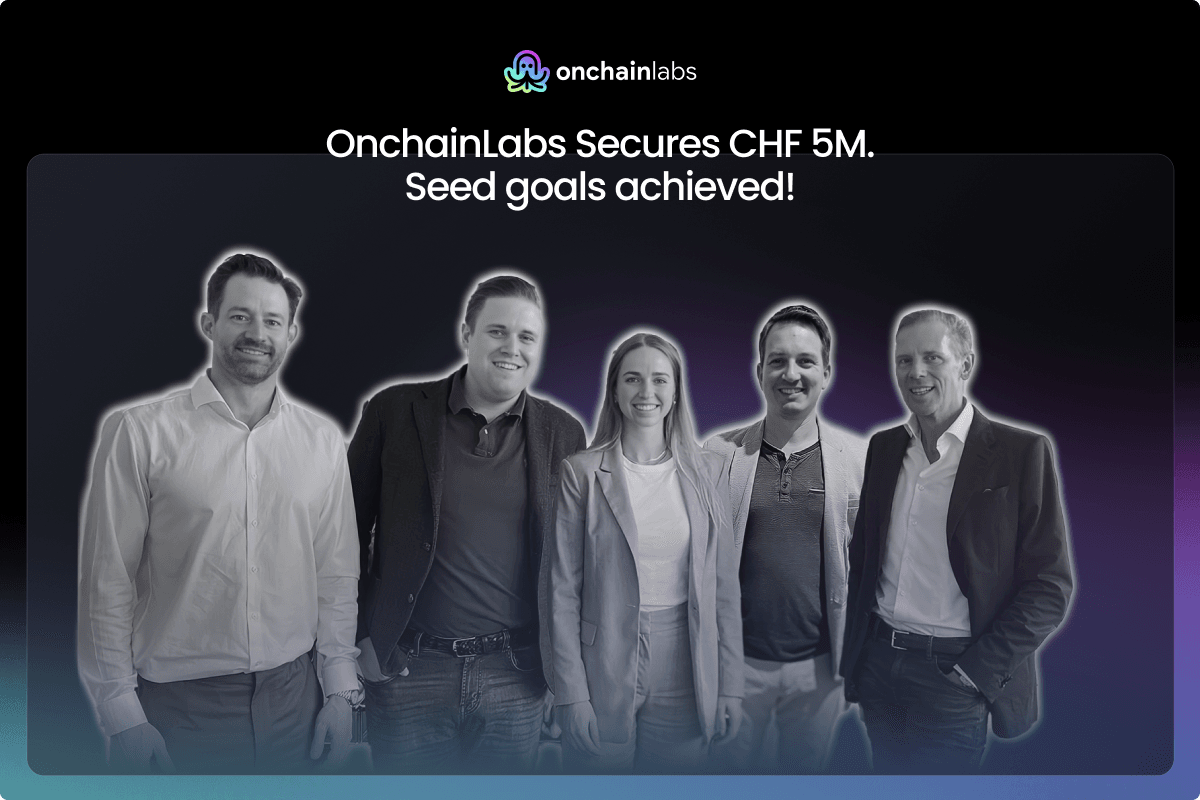
OnchainLabs Secures CHF 5M in Seed Round

We are thrilled to announce that we have successfully completed our seed round, raising CHF 5 million. This funding was led by prominent German investors, including serial entrepreneur Jochen Roeser, Prof. Dr. Volker Gruhn, founder of Adesso, and professional football player Ilkay Gündogan, with ongoing support from our initial investors, Thomas Staubli and Patrick Lütjens. This significant investment demonstrates strong confidence in our vision and positions us for exciting future growth and innovation. In early July 2024, we announced the launch of our non-custodial Onchain Gateway wallet (OG Wallet). And now, we are happy to announce that we have successfully closed our seed round, securing CHF 5 million from three prominent German investors: serial entrepreneur Jochen Roeser, founder of Adesso Prof. Dr. Volker Gruhn and professional football player Ilkay Gündogan as well as continuous support from our initial investors: Thomas Staubli and Patrick Lütjens. This milestone marks a significant step in our company's journey, demonstrating strong support from current investors and setting the stage for our future growth and innovation. In early July 2024, we announced the launch of our non-custodial Onchain Gateway wallet (OG Wallet). And now, we are happy to announce that we have successfully closed our seed round, securing CHF 5 million from three prominent German investors: serial entrepreneur Jochen Roeser, founder of Adesso Prof. Dr. Volker Gruhn and professional football player Ilkay Gündogan as well as continuous support from our initial investors: Thomas Staubli and Patrick Lütjens. This milestone marks a significant step in our company's journey, demonstrating strong support from current investors and setting the stage for our future growth and innovation. The investment, led by German serial entrepreneur Jochen Roeser and his investment firm MediaGate, brings not only financial backing but also strategic advantages. Jochen, who has extensive connections in various German business sectors, also brings along MediaGate's existing shareholders, Prof. Dr. Volker Gruhn, founder of Adesso, a big IT house from Germany, and Ilkay Gündogan, captain of the German Football National Team and professional football player at FC Barcelona. As OnchainLabs, we will acquire all of MediaGate's assets and staff, including a major NFT collection from Sorare.com, that will continue to be managed by Richard Roeser. The collection is worth seven figures and generates regular returns through Sorare's play-to-earn program. Furthermore, Tobias Schneider, a serial entrepreneur and former Olympic athlete, will join us as part of the Founding Team and fill the role of Chief Operating Officer. His experience and expertise will significantly enhance our business development efforts as we position our company for substantial growth. Our Co-Founders, Naemi Hügli, Tobias Schneider and Florian Ehrbar, expressed pride in the investor's strong vote of confidence and emphasized the team's commitment to becoming a significant player in the blockchain industry. "We are incredibly excited about this new chapter for OnchainLabs. The strategic merger with MediaGate and the support from our investors position us perfectly to lead the way in Web3 innovation”, says Florian, our CEO OnchainLabs. With the strong support from the current round of investors that made the seed round successful, our focus will now be on growing the team and enhancing product delivery. We will also move to the crypto valley in Zug to be at the heart of the blockchain hub in Switzerland. As OnchainLabs we remain dedicated to making Web3 more accessible for brands and businesses with the vision to completely redefine user engagement and retention.

Sep 21, 2026

Importance of Gamification for Brands and How Web3 Can Enhance It

In the modern digital era, brands are always on the lookout for fresh strategies to connect with their audience, boost customer loyalty, and stand out from the competition. Among all strategies, gamification has proven to be a highly effective approach, turning ordinary interactions into exciting and engaging experiences. With the rise of Web3 technologies, the possibilities for gamification have expanded even further, allowing brands to craft immersive and rewarding experiences like never before. Understanding Gamification Gamification involves applying game-design elements and principles in non-game contexts to engage users, motivate action, and solve problems. Common gamification elements include points, badges, leaderboards, badges, level systems, challenges, and rewards. These elements tap into fundamental human desires for achievement, competition, and social interaction, making activities more enjoyable, social and compelling. Roughly 70% of the 2,000 biggest companies on the globe are using gamification. Retail, health and wellness, food and beverage, and technology industries are at the forefront of using gamification in the workplace. Companies like Google, Domino’s Pizza, Samsung, and Starbucks, implement gamification as an excellent marketing tactic, corporate training, and a tool to increase engagement. Key Benefits of Gamification for Brands Here are some key advantages of gamification for brands to differentiate themselves in the market: 1. Enhanced Engagement: Gamification transforms passive consumers into active participants. By incorporating interactive and fun elements, brands can capture and retain the attention of their audience for specific periods. This enhanced engagement can lead to increased brand awareness and a stronger emotional connection with customers. 2. Increased CustomerLoyalty: Rewarding customers for their engagement and loyalty can foster a deeper connection with the brand. Gamified loyalty programs, where customers earn points or rewards for their purchases and interactions, can incentivize increased sales and long-term commitment. 3. Data Collection and Insights: Gamification provides valuable data on user behavior, preferences, and engagement patterns. Brands can leverage this data to refine their marketing strategies, personalize customer experiences, and make informed business decisions. 4. Community Building: Gamification often involves social elements such as leaderboards and collaborative challenges, which can foster a sense of community among customers. This community aspect can enhance brand loyalty and advocacy, as customers feel more connected to the brand and its other patrons. Brands can even organize offline events to bring participating community members for exclusive events and activities. 5. Differentiation: In a crowded market, gamification can help brands stand out by offering unique and memorable experiences. A well-designed gamified experience can set a brand apart from competitors and create a distinctive brand identity. Even if gamification provides a lot of benefits, there are still many brands that haven’t tried this strategy in their operations. The Role of Web3 in Enhancing Gamification Web3 introduces decentralized technologies such as blockchain, cryptocurrencies, and non-fungible tokens (NFTs). These technologies can significantly enhance the gamification strategies of brands in several ways: 1. Ownership and Scarcity: NFTs can represent unique digital assets that customers can own, trade, and showcase. Brands can create limited-edition digital collectibles or in-game items, adding a sense of exclusivity and value to their gamification efforts. This sense of ownership can drive engagement and loyalty as customers seek to acquire and trade these digital assets. 2. Transparency and Trust: Blockchain technology ensures transparency and security in transactions and reward mechanisms. Customers can trust that their achievements and rewards are verifiable and cannot be tampered with, fostering trust and credibility in the brand's gamification initiatives. 3. Interoperability: Web3 technologies enable interoperability between different platforms and ecosystems. Brands can create gamified experiences that span multiple platforms, allowing customers to use their digital assets and rewards across various applications and services. This can enhance the overall value and appeal of the gamified experience. 4. Tokenomics and Incentives: Cryptocurrencies and tokens can be integrated into gamification strategies to create robust incentive structures. Brands can reward customers with tokens that have real-world value, encouraging more significant engagement and participation. These tokens can also be used for discounts, exclusive access, or other benefits, further enhancing customer loyalty. 5. Decentralized Governance: Web3 allows for decentralized governance models where users can have a say in the development and evolution of the gamified experience. Brands can involve their community in decision-making processes, creating a sense of ownership and investment among users. Gamification Examples Starbucks The Starbucks loyalty program certainly owes some of its success to clever use of gamification. Collectable stars earned with each purchase can be saved up to exchange for discounts, free menu items and other rewards. The Starbucks Rewards app personalized its promotions to each customer using the purchase and preference data it collects. The app also sets challenges for users to complete, such as providing a free drink to users who buy a certain amount of a specific product within a week. It also has time-sensitive offers, such as double stars on certain days, to further incentivize users. Gucci Like many other luxury fashion brands, Gucci has taken an interest in NFTs and the emerging field of ‘digital fashion’. So far, Gucci has released digital avatar items and clothing for Roblox, Pokemon Go! and Zepeto, a virtual world where users can create their own unique avatar and chat with friends. Gucci has also created the Gucci Sneaker Garage app which allows users to customize their own digital Gucci sneakers. Gamification is helping Gucci reach an entire new market of primarily younger, online consumers and gamers. Many other luxury fashion brands, like Louis Vuitton and Balenciaga, are also adopting Gucci’s forward-thinking outlook on the digital world. Nike Nike is another notable name that’s jumped into the world of Web3 with NIKELAND, a free immersive sports space in the metaverse where customers can earn tokens that translate to currency for digital apparel. Players come to NIKELAND to participate in various sports competitions with their friends and other players. The virtual world offers mini-games that range from soccer and basketball games in Nike stadiums, to various athletic and swimming events. The winners of these competitions earn rewards, which can be spent on digital products to dress their avatars. Dolce&Gabbana Many luxury fashion houses have launched their own NFT collections, but Dolce&Gabbana took it a step further with their DGFamily NFT Community. The community provides an exclusive ecosystem of benefits for its loyal fans in both the physical world and metaverse. Holders of the bespoke NFT gain access to special drops and collaborations, as well as the chance to participate in unique Dolce&Gabbana events. Conclusion Gamification has proven to be a valuable strategy for brands seeking to enhance engagement, loyalty, and differentiation. With the integration of Web3 technologies, the potential for gamification is expanded, offering new opportunities for ownership, transparency, interoperability, and incentivization. By leveraging these advancements, brands can create immersive and rewarding experiences that resonate with their audience, build stronger relationships, and drive long-term success in the digital age. In this rapidly evolving landscape, staying ahead of the curve by adopting gamification and Web3 strategies can be a game-changer for brands, setting them on a path to sustained growth and innovation. OnchainLabs is here to help your brand or business adopt Loyalty Programs and embrace Web3-powered gamification. Feel free to email us or book a meeting with our team members. We will get back to you as soon as possible to discuss how we can assist you in achieving your goals.

Sep 21, 2026